How Minnesota Weather Shapes Roofing Decisions in the Twin Cities

How Minnesota Weather Shapes Roofing Decisions in the Twin Cities
Roofs in Minnesota work harder than most. The Twin Cities metro swings from subzero January mornings to 95°F August afternoons, with hail, wind, and heavy snow layered on top. That 150-degree annual swing forces decisions that homeowners in milder climates rarely think about. Both the roof you choose and the contractor you hire must be built for the state’s conditions.
The Four Weather Stressors That Define Minnesota Roofing
Every region has a dominant weather risk. Minnesota has four, and they each punish roofs differently.
Hail. The state sits inside a secondary hail corridor. When storms roll through from late April through September, they drop stones large enough to bruise or crack asphalt shingles. According to NOAA Storm Prediction Center data, Minnesota records dozens of severe hail events each year, many concentrated in the south-central state and Twin Cities region.
Ice dams. When attic heat melts roof snow and the runoff refreezes at the eaves, the ice ridge backs water up under the shingles. In neighborhoods of 1970s-era homes with marginal attic insulation, ice dams are the single most common winter roofing claim. Flashing failure usually follows.
Freeze-thaw cycling. Minnesota crosses the freezing line more than 70 times in a typical winter. Every cycle expands and contracts water trapped in shingle gaps, around fasteners, and inside flashing seams. Over a decade, this is what quietly destroys otherwise intact roofs.
Straight-line wind. Spring and fall derechos and tornado-spawning systems can strip shingles off in a single afternoon. Edge detailing and underlayment quality matter more in Minnesota than in most states.
Material Choices That Actually Survive Here
Not every roofing material on the shelf holds up in the upper Midwest. Three options dominate Twin Cities residential work for good reason:
- Architectural asphalt shingles with a high wind rating. Three-tab shingles lose appeal fast in hail country. Architectural shingles rated for 110–130 mph winds are the baseline for most local installs.
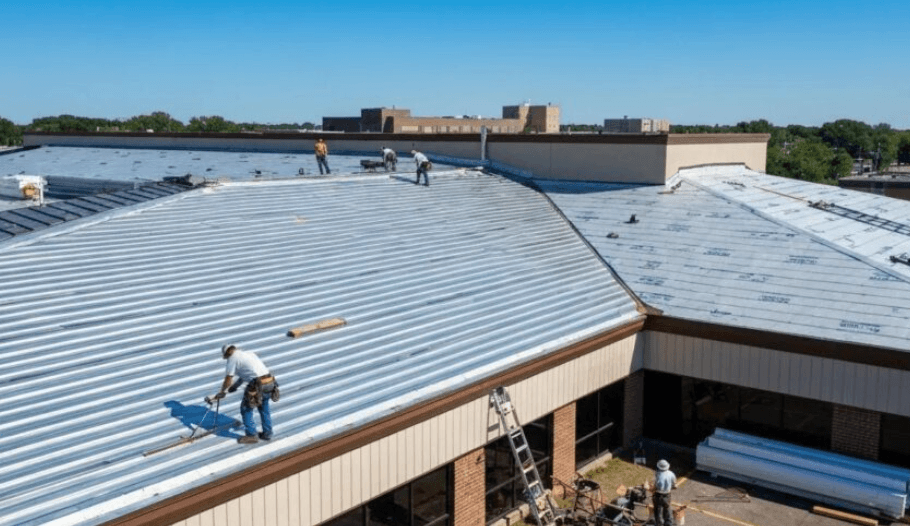
- Standing seam metal. More expensive up front, but it sheds snow cleanly, resists hail better than most asphalt options, and routinely carries 40–50 year service lives here.
- Synthetic slate or composite shake. For homes where aesthetics matter and budget allows, synthetic slate handles freeze-thaw better than natural slate and won’t curl or split the way cedar shake does.
Each holds up to the Minnesota climate — but only if the installation details are right. A correctly installed asphalt roof will outlast a poorly installed metal one every time.
Why the Installation Window Matters
Minnesota has roughly six months of reliable roofing weather: mid-April through mid-October. Outside that window, temperatures prevent shingle sealant strips from activating properly, which means storms the following spring can pry loose panels that looked fine the day they were installed. Homeowners planning a replacement should start the estimate process in late winter and book the install in late April or early May. Waiting until after a June storm often means a two-month queue with local crews.
The Case for Local Contractors
Storm-chasing out-of-state outfits show up every spring after major hail events. Some do decent work; many don’t. The real problem is warranty recourse — a warranty from a company that left the state four months after your install is worth nothing when a shingle seam opens up two winters later. Locally based, state-licensed contractors have a harder time walking away from bad work.
For homeowners in the south metro, firms like Exteriors Plus Roofing, Siding & Windows — based in Savage and serving the surrounding Twin Cities suburbs — fit that profile. They hold a Minnesota residential builder license (BC637312), which is the minimum credential any homeowner should verify before hiring a contractor. The Minnesota Department of Labor and Industry maintains a public license database where any contractor can be checked in under a minute.
Questions Worth Asking Before You Sign
A few questions separate contractors who plan to stand behind their work from those who don’t:
- What is your Minnesota contractor license number, and is it current?
- What is the wind and hail rating on the shingle you’re quoting?
- What does your workmanship warranty cover, and for how long?
A reputable roofer won’t hesitate on any of those. If a salesperson gets evasive, that’s the answer you need.
Bottom Line for Minnesota Homeowners
The right roof for a Twin Cities home is the one that matches the region’s weather reality, not the one that’s cheapest on the first page of the estimate. Architectural shingles or standing seam metal, installed in the proper season, by a licensed local contractor with a real physical address — that’s the formula. The roof is your single biggest weather barrier, and in Minnesota, it takes a genuine beating.