
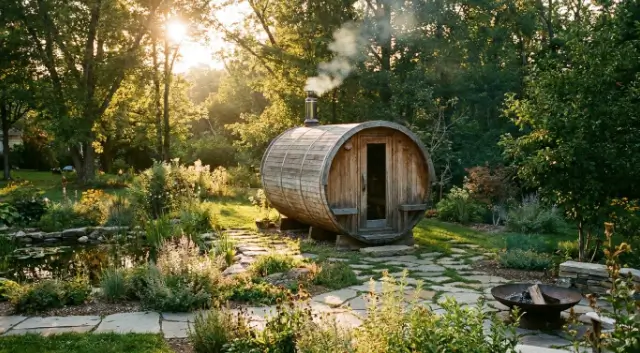
The Best Barrel Sauna Setup for Two People Who Use It Daily

For two people using a barrel sauna most days of the week, the setup that works best is a 6-foot diameter barrel, 6 to 7 feet of interior length, a 5.5 to 6 kilowatt electric heater, and a door and bench layout that lets both people sit without stepping over each other. Daily use changes the calculation from an occasional-use barrel bought for guests: heater recovery time, seat comfort, and low-maintenance materials matter more than raw capacity for two who use it constantly.
Why 6 Feet in Diameter Is the Right Size for Two
A barrel’s diameter, not its length, determines headroom and how the curved benches feel to sit on. At 6 feet in diameter, two facing benches along the barrel’s length give each person a full-length seat with enough headroom to sit upright comfortably, since the curve of the barrel roof clears a seated adult’s head at that diameter without forcing a hunch. Smaller 5-foot barrels marketed for one or two people work but feel tight for two adults sitting facing each other for a full session, while barrels above 7 feet in diameter add cost and heating volume that two daily users do not need.
How Long Should the Barrel Be for Two Regular Users?
A 6 to 7 foot interior length, measured along the barrel’s cylinder, gives two people bench space to sit side by side or facing each other depending on the layout, plus room to stretch legs without touching the opposite wall. Longer barrels built for four to six people add length rather than diameter, which is the right move for larger households but adds interior air volume that a heater has to warm on every single session, a real consideration for two people running the sauna daily rather than occasionally.
What Heater Size Actually Makes Sense for Daily Use?
Standard sizing charts for a 6-foot barrel this size call for roughly 4.5 to 6 kilowatts, and for daily use it is worth choosing near the top of that range rather than the minimum. A heater sized at the low end of the chart works fine for occasional weekend use but runs longer and recovers slower between back-to-back sessions, which becomes a real friction point when the sauna is part of an everyday routine rather than a Saturday treat. A slightly larger heater also handles cold-weather heat loss better without needing to run at maximum output every single session, which extends its working life.
What Bench and Door Layout Works Best for Two?
Facing benches along the length of the barrel let two people sit across from each other, which most couples and daily-use pairs prefer for conversation during a session, while an L-shaped or single continuous bench along one curved wall suits two people who want to sit side by side and stretch out independently. Door placement at one end, rather than centered, keeps both bench areas usable without anyone having to climb over the other person to get in or out mid-session, a small detail that matters more once a household is using the sauna most days rather than occasionally.
What Wears Out Faster With Daily Use, and What Should Buyers Watch?
Door gaskets and heater stones see the most accelerated wear under daily use compared with weekend-only ownership. Gaskets compress and lose some seal over hundreds of open-close cycles a year rather than dozens, and heater stones crack from repeated fast heating and cooling cycles, typically needing replacement every one to three years for daily users versus three to five years for occasional ones. Hoop bands holding the curved staves together should get a seasonal tension check regardless of use frequency, but a daily-use barrel benefits from that check happening more like every few months rather than once a year.
What Does the Total Cost Look Like for a Two-Person Daily-Use Setup?
A well-built 6-foot two-person barrel with a mid-range electric heater typically runs $4,000 to $6,500 for the unit, and daily users should budget slightly above the minimum on heater wattage rather than the cheapest model that technically meets the sizing chart, since the wear-and-tear savings from a heater with reserve capacity tend to pay for themselves over a few years of near-daily sessions. Shoppers comparing options for exactly this kind of frequent, two-person use can browse the barrel sauna range at sweatdecks.com/collections/barrel-saunas, filtering by interior dimensions and heater kilowatt rating rather than by price alone.
How Should Ventilation Be Handled for Daily, Two-Person Sessions?
A barrel sauna needs a lower intake vent near the heater and an upper exhaust vent near the roof peak to keep fresh air circulating and prevent the interior from feeling stale or oxygen-poor during longer sessions, and daily use makes that airflow more important, not less, since two people breathing in a closed barrel for 15 to 20 minutes most days benefits from a steady air exchange rather than a sealed box. Most manufacturers size vents relative to interior cubic footage, and it is worth confirming a 6-foot barrel’s vent openings meet that standard rather than assuming a smaller decorative vent is sufficient just because the barrel itself is compact.
What Storage or Prep Space Should Be Planned Nearby?
Daily users benefit from a small bench, hook rack, or shelf just outside the barrel door for towels, water, and a phone or timer, since the friction of a session-ending walk back to the house for basic items is exactly the kind of small inconvenience that erodes a daily habit over a few months. A covered spot for towels also keeps them dry between sessions in wet climates, which matters more for a routine used most days of the week than for an occasional weekend sauna where drying time between uses is rarely an issue.
What Does the Research Say About Frequent Sauna Use Specifically?
The strongest evidence for sauna’s associated health benefits actually comes from studies of frequent use, which is directly relevant to a household planning daily sessions. A landmark cohort study in JAMA Internal Medicine found that men who used a sauna four to seven times a week had lower rates of fatal cardiovascular events than men who used one once a week, an association, not a guarantee for any individual. A 2018 review in Mayo Clinic Proceedings summarized similar cardiovascular associations reported across multiple studies of regular sauna use. Anyone with a heart condition or blood pressure concerns planning genuinely frequent sessions should be especially thoughtful, since the research describes population associations in people already tolerating sauna use, not a green light for every individual regardless of health status.
Frequently Asked Questions
What size barrel sauna is right for two people using it daily? A 6-foot diameter barrel with 6 to 7 feet of interior length is the standard sweet spot, giving each person a full-length bench without crowding.
What heater size does a two-person barrel sauna need for daily use? Typically 4.5 to 6 kilowatts. For daily use, choose near the top of that range or a heater with fast recovery.
How much maintenance does a daily-use barrel sauna actually need? Check hoop-band tension seasonally, replace heater stones every one to three years, and wipe down benches after each session.
Is a two-person barrel sauna worth it for daily use compared to a larger one? For two regular users, yes. It heats faster, costs less per session, and needs a smaller heater than an oversized unit.
References
- Association between sauna bathing and fatal cardiovascular and all-cause mortality events, JAMA Internal Medicine, 2015
- Cardiovascular and Other Health Benefits of Sauna Bathing: A Review of the Evidence, Mayo Clinic Proceedings, 2018
- Clinical Effects of Regular Dry Sauna Bathing: A Systematic Review, Evidence-Based Complementary and Alternative Medicine, 2018
By Marcus Delaney