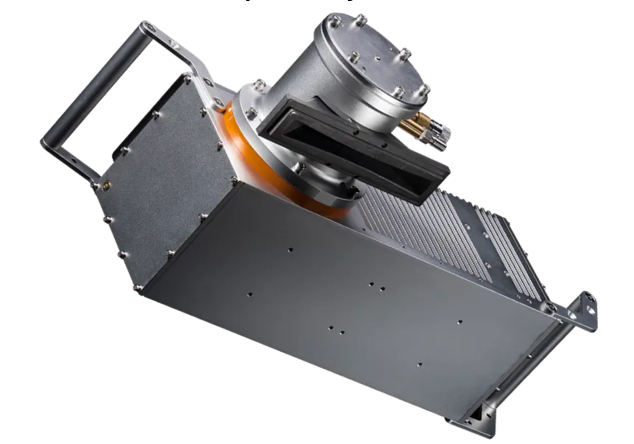
How Advanced X-ray Sources Enhance Security Inspection Systems

Security inspection systems have become increasingly important across airports, logistics hubs, transportation facilities, public venues, and critical infrastructure. As threats become more sophisticated, inspection equipment must identify concealed objects quickly while maintaining dependable imaging performance.
At the center of many modern screening systems is the X-ray source, which generates the radiation required to create internal images of baggage, parcels, cargo, vehicles, and other objects. Working with experienced X ray source manufacturers can help OEMs develop inspection systems that deliver stable output, compact integration, and consistent performance across demanding security applications.
The Role of X-ray Sources in Security Screening
An X-ray source is essential to inspection systems because it generates the radiation needed to create detailed internal images. As X-rays pass through objects, materials absorb different amounts of energy, allowing detectors to capture variations and produce images for identifying concealed items.
In security environments, screening must be fast, accurate, and consistent, especially when processing large volumes of baggage and parcels. Reliable X-ray sources provide stable output, supporting clearer and repeatable imaging.
This consistency helps operators distinguish materials, detect hidden threats, and support automated analysis while maintaining dependable performance during continuous security screening operations.
Improved Detection for Baggage and Parcel Inspection
Baggage and parcel screening are key applications of X-ray inspection technology, allowing security teams to examine luggage, packages, and shipments without opening them. Modern X-ray sources generate the energy required to penetrate various materials and produce clear, useful imaging data.
Consistent output supports reliable images during continuous operation, while advanced designs can be customized for specific security equipment. Important factors include operating voltage, power output, focal spot size, cooling, shielding, and physical dimensions.
For OEMs, source selection should also consider detector compatibility, scanning geometry, throughput requirements, and the overall architecture of the inspection system.
Supporting High-Penetration Cargo Inspection
Cargo and container inspection presents different challenges than standard baggage screening because large or dense materials may require higher-energy X-rays for clear imaging.
High-voltage X-ray generator technology provides the power needed for deeper penetration, while a high voltage power supplier supports controlled energy delivery to X-ray tubes for large-scale scanning. These systems operate across logistics centers, ports, border facilities, and freight terminals where dependable performance is essential.
Advanced X-ray source configurations combine effective power management, thermal control, and flexible integration to maintain consistent imaging quality during extended inspection operations, supporting efficient and reliable cargo security screening.
Compact Design for Modern Security Equipment
Space is a consideration in security inspection systems. Portable scanners, baggage machines, and mobile inspection units need powerful components without unnecessary size or weight. Integrated X-ray sources address this challenge by combining functions within a compact assembly.
Depending on the configuration, an integrated unit can include the X-ray tube, high-voltage inverter or generator, filament supply, control electronics, and heat dissipation components. This architecture can simplify OEM system development, reduce components, and support easier installation and maintenance.
Compact construction is especially valuable for portable security equipment, enabling mobility, deployment, and efficient operation in demanding inspection environments.
Thermal Management Supports Continuous Operation
Security screening equipment can be required to operate continuously, particularly in airports, logistics centers, and transportation environments. During operation, X-ray sources and associated high-voltage components generate heat that must be managed effectively.
Efficient cooling helps maintain stable operating conditions and can contribute to long-term component reliability. Depending on the application, systems may use air cooling, liquid cooling, heat radiators, or other thermal management methods.
An X-ray source designed with integrated heat dissipation capabilities can simplify OEM engineering while supporting reliable operation. Effective thermal management also helps reduce the risk of performance interruptions caused by excessive heat during demanding inspection cycles.
Supporting Mobile and Portable Security Applications
Security threats are not limited to fixed checkpoints. Portable inspection equipment is increasingly useful for field operations, vehicle examinations, suspicious package assessment, and specialized security tasks.
Portable X-ray sources need to balance power, size, weight, shielding, durability, and energy efficiency. Battery-operated configurations can provide additional flexibility where access to conventional power infrastructure is limited.
Compact integrated designs can make it easier to build portable equipment without sacrificing essential imaging capabilities. Features such as localized radiation shielding and efficient component integration can further support mobile inspection applications.
Integration Flexibility Helps OEM Development
Security equipment manufacturers often have different mechanical, electrical, imaging, and control requirements. A source that can be adapted to those requirements can make product development more efficient.
Integration-ready X-ray sources may support different input configurations, output ranges, beam geometries, communication interfaces, cooling methods, and physical layouts. Such flexibility allows OEMs to select a configuration that aligns more closely with the architecture of their equipment.
This approach can also reduce engineering complexity by bringing critical components together within a coordinated assembly. Instead of designing every element independently, manufacturers can work with an integrated platform that supports faster system development.
Choosing the Right X-ray Source for Security Systems
Selecting an X-ray source requires careful evaluation of the intended application. Security OEMs should consider operating voltage, power requirements, focal spot size, beam angle, cooling method, shielding, dimensions, communication interfaces, environmental conditions, and expected inspection volume.
Baggage scanners may have different requirements from cargo systems, while portable EOD inspection equipment may prioritize lightweight construction and battery operation. High-throughput systems may require robust thermal management and consistent output over extended operating periods.
The best solution is therefore one that balances imaging performance with integration, safety, reliability, and system-level requirements.
See also: How Small Business Coaching Can Help You Tackle Early Business Struggles
Conclusion
Advanced X-ray sources provide the foundation for reliable security inspection by enabling consistent imaging, high penetration, compact system design, effective thermal management, and flexible integration. From baggage and parcel screening to cargo, people, vehicle, mobile, and EOD inspection, the right source can support demanding operational requirements. Choosing experienced X ray source manufacturers helps OEMs develop security systems designed for accuracy, reliability, efficiency, and long-term performance.
For dependable security inspection, advanced technology helps OEMs meet requirements. VJ X-Ray provides integrated X-ray sources and high-voltage generators for OEM security applications. Its solutions support baggage scanning, cargo inspection, portable EOD inspection, people screening, vehicle scanning, and mobile backscatter systems. With compact designs, radiation shielding, integrated cooling, stable output, and customizable configurations, VJ X-Ray helps OEMs develop reliable inspection equipment suited to demanding operational environments and specialized security requirements.